
Linings and Accessories for the Fashion House Badura
Rome, March 16, 2026 – Interpreting a Brand’s DNA and translating It into a coherent and applicable design language


Rome, March 16, 2026 – Interpreting a Brand’s DNA and translating It into a coherent and applicable design language
Rome, March 16, 2026
The fashion house BADURA was founded under the artistic vision of the creative spirit, Aleksandra Badura. A tireless traveler and innovative thinker, Aleksandra translates both her enthusiasm for "Made in Italy" and her love for the distinctive identity of raw materials into a handmade collection of finely crafted luxury accessories.
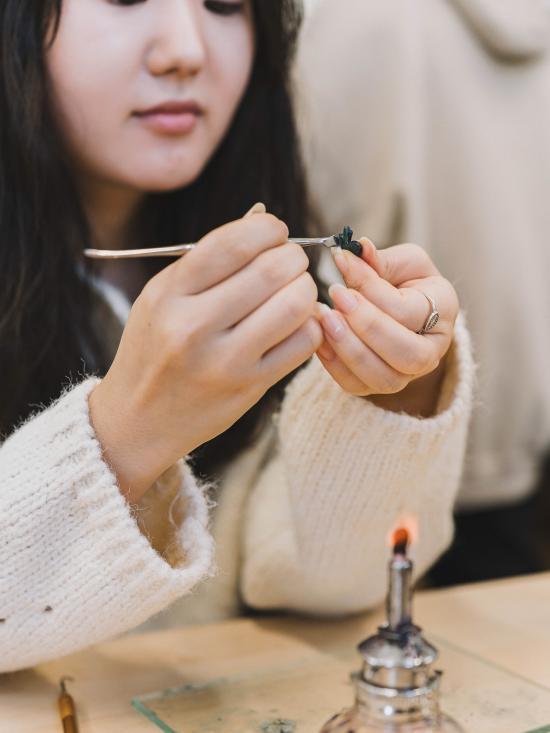
Taking into account the brand’s aesthetic codes and positioning, the two classes, guided by professor Antonella Petrecca, worked on two distinct but deeply connected design areas: on one hand, jewelry design, and on the other, the development of the BADURA signature lining, conceived as an identifying and narrative element of the collections.
In both cases, the goal was not merely a formal exercise, but the ability to interpret a brand’s DNA and translate it into a coherent and applicable design language.
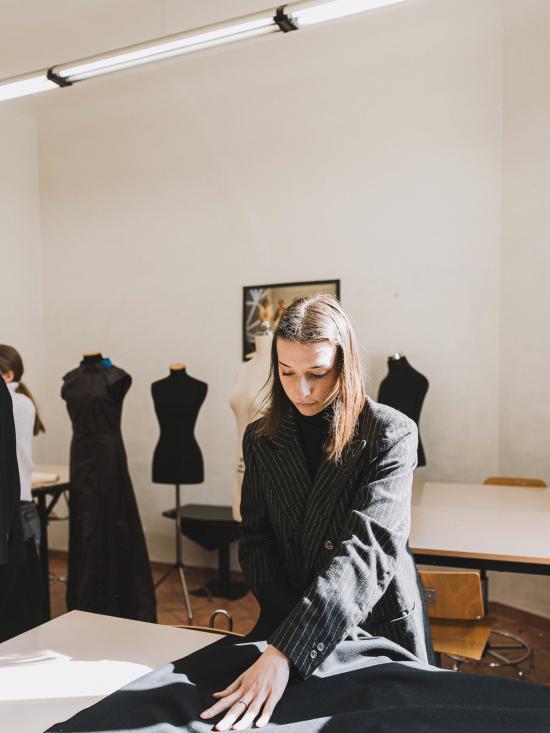
After the first phase of designing the lining fabric, carried out by both classes, the project split into two distinct paths: on one side, the creation of a capsule of accessories developed by Jewelry Design students; on the other, textile manipulations aimed at “enhancing” the designed fabric to bring it from the interior to the exterior of the bag, executed by Fashion Design students.
Three projects were highlighted by Aleksandra Badura for their particular interest:
Klara Mattstedt, Jewelry Design: In her work on jewelry, she treated geometry and structure as a language, developing a coherent code that could effectively engage with the world of leather goods. Her project demonstrates formal rigor and sensitivity to ornamentation as architecture.
Claudia Iori, Jewelry Design: Working on the lining pattern, she chose to start from the double-B monogram, interpreting it as a design matrix. Aleksandra found this choice particularly stimulating because it encourages reflection on the relationship between heritage and design, and on the need to always keep the brand’s identity codes legible.
Federico Scampini, Fashion Design: Demonstrating an already advanced design maturity, both conceptually and in his ability to integrate imagination, material, lining, and product, he presents a vision that goes beyond a single exercise and approaches a collection-level thinking, inspired by the history of Roman architecture.
Congratulations to our students, with the words of Aleksandra Badura: "In general, what I consider most successful is the shift, by some students, from a purely aesthetic approach to a conscious design thinking, in which every choice, form, sign, rhythm, and material has a reason and responsibility… Today, in the world of design and fashion, it is not enough to draw well. It is necessary to learn how to build a vision, to evoke emotions, to give meaning to one’s choices, and to understand the context in which the project will live."
Other courses
-
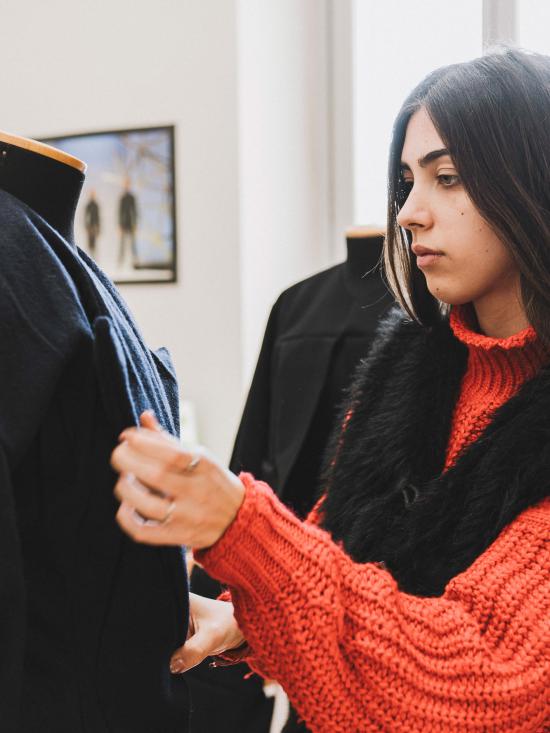
Bachelor's Degree in Fashion Design
Three-year undergraduate Bachelor of Arts
-
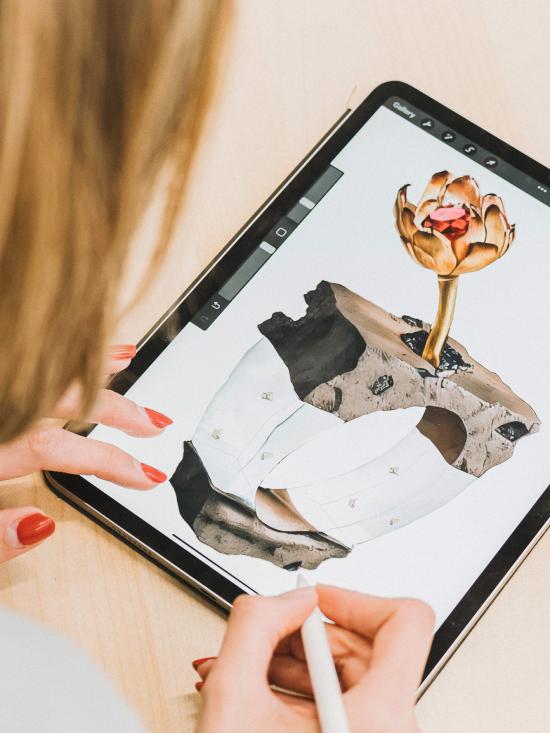
Bachelor's Degree in Jewelry Design
Three-year undergraduate Bachelor of Arts
-
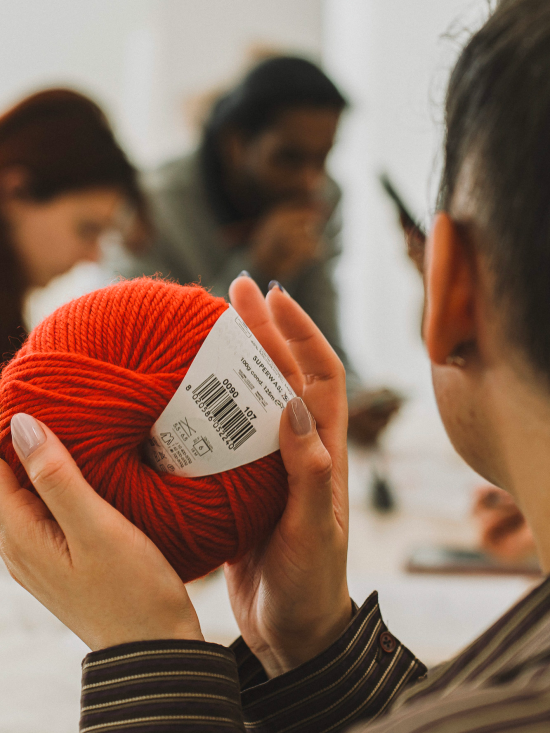
FASHION AND TEXTILE DESIGN
MASTER OF ARTS
-
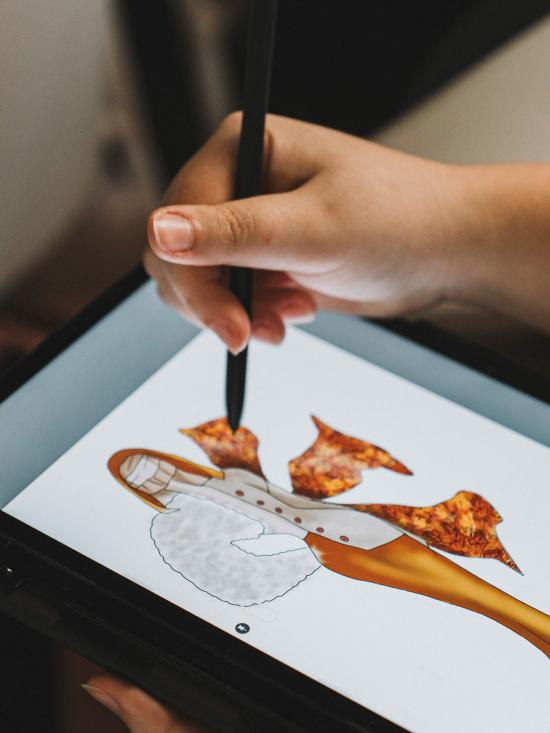
FASHION DESIGN AND MANAGEMENT
MASTER OF ARTS
-
MASTER IN CONTEMPORARY JEWELRY DESIGN
MASTER OF FINE ARTS
-
ONE-YEAR COURSE IN FASHION DESIGN
One-year Fashion Design course
-
STYLING COURSE
Professional course in Styling
-
Course in Fashion Business & Retail Strategy
Professional Course in Fashion Business & Retail Strategy